By: Donald L Swanson
The equitable mootness doctrine and statutory mootness doctrine get a lot of attention in bankruptcy, but as to the doctrine of constitutional mootness—not so much.
Here’s an opinion on constitutional mootness: New Mexico Cattle Growers’ Association v. United States Forest Service, Case No. 25-2034 (10th Cir., decided June 3, 2026). What follows is a summary of this opinion.
Facts
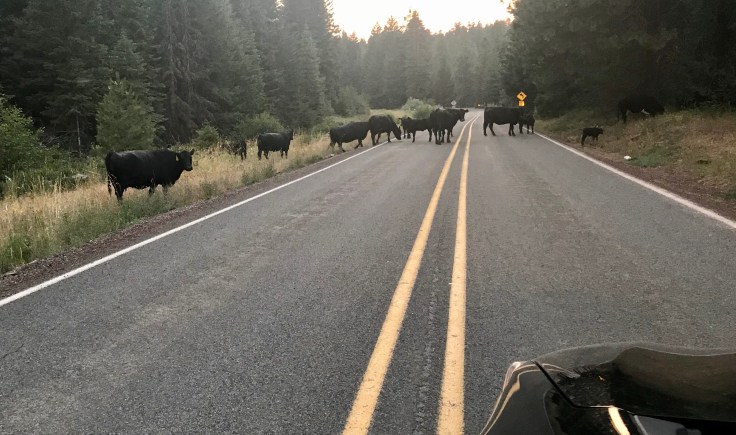
This case begins in the 1970s, when a federal grazing permittee declares bankruptcy and abandons hundreds of domesticated cattle in the Gila Wilderness of the Gila National Forest.
Over time, these cattle multiply and roam free in the forest.
The U.S. Forest Service wants to remove the feral cattle, because their presence and overgrazing harm the forest’s environment and water quality. For decades, the Forest Service conducts nonlethal removal operations, but such efforts fail to meaningfully reduce the herd’s population.
In 2022, the Forest Service changes course and begins killing the cattle—using sharpshooters in hovering helicopters.
Plaintiffs sue, seeking a TRO to stop the aerial shooting:
- some of the Plaintiffs are ranchers with grazing permits, worrying that their cattle could mistakenly be killed; and
- others of the Plaintiffs are environmentalists, claiming the aerial shooting creates aesthetic and environmental harms to the forest they enjoy.
The District Court denies the TRO, and the Forest Service completes its planned operations—killing sixty-five Gila cattle.
Then, the Forest Service stipulates with Plaintiffs (in June 2022) to dismissal of the suit because, (i) the removal operations are complete, and (ii) the Forest Service has no immediate plans to continue the shootings.
But six months later (in November 2022), the Forest Service proposes to conduct more aerial shootings to complete the removal of Gila cattle. In February 2023, the Forest Service proceeds with the aerial shootings.
Plaintiffs again sue the Forest Service and move for a TRO, insisting that the Forest Service must capture the Gila cattle and offer them for sale. The District Court denies the TRO request again.
The Center for Biological Diversity, an environmental organization concerned about the detrimental effects of the Gila cattle on the forest, intervene to also defend the agency’s removal actions.
By December 2023, the Forest Service completes its removal operations. So, in January 2025, the District Court dismisses all claims with prejudice.
Plaintiffs appeal to the Tenth Circuit Court of Appeals.
While the appeal is pending, the Forest Service declares:
- it has achieved the intended purposes of the removal operations;
- removal operations are no longer needed; and
- its officers will refrain from further shootings when removing any estray or feral cattle and use, instead, the agency’s nonlethal procedures.
Then, the Forest Service and the Center for Biological Diversity argue the appeal is constitutionally moot because the Forest Service has disavowed its intention to continue the shootings.
The Constitutional Mootness Doctrine Described
The constitutional mootness doctrine is grounded in the U.S. Constitution’s Article III requirement that federal courts may only decide actual ongoing cases or controversies.
The case-or-controversy requirement continues through all stages of a federal judicial proceedings, including appeal.
So, even if a live controversy exists when a case is filed, that can change when subsequent events prevent a decision in the case from affecting the parties’ rights.
When a plaintiff seeks prospective relief—e.g., a declaratory judgment or injunction—the mootness inquiry looks to whether the requested relief will actually alter the future conduct of the named parties:
- the crucial question is whether a present determination of the issues will have some effect in the real world.
The Doctrine Applied
Plaintiffs seek declaratory and injunctive relief against the Forest Service’s 2023 decision to conduct aerial shooting operations.
But the Forest Service has disavowed that decision for future action.
Accordingly, the prospective injuries from which Plaintiffs seek judicial relief—e.g., accidental killing of their cattle and aesthetic harms to the environment—have disappeared.
The result is that this Court cannot provide the relief Plaintiffs seek because Plaintiffs cannot satisfy the Article III case or controversy jurisdictional requirement. So, this appeal is moot.
Two Exceptions Considered
Plaintiffs contend the case is not moot because feral cattle have recently been seen in the forest. That means:
- the Gila cattle will repopulate; and
- the Forest Service will reconvene its aerial shootings.
Plaintiffs note that the Forest Service has already, in this case, resumed the shootings after giving a contrary assurance.
Therefore, Plaintiffs argue, two exceptions to the constitutional mootness doctrine apply here: (i) voluntary cessation, and (ii) capable of repetition, yet evading review exception.
But neither exception applies here, declares the Tenth Circuit. Here’s why.
–Voluntary Cessation
The voluntary cessation exception counteracts the possibility of a defendant ceasing illegal action long enough to render a lawsuit moot and then resuming the illegal conduct.
Voluntary actions may, nevertheless, moot litigation if two conditions are satisfied: (1) it can be said with assurance that there is no reasonable expectation that the alleged violation will recur, and (2) interim relief or events have completely and irrevocably eradicated the effects of the alleged violation.
The withdrawal or alteration of administrative policies can moot an attack on those policies, and the mere possibility that an agency might rescind its intended actions does not enliven a moot controversy.
Here, the Tenth Circuit finds, there is no reasonable expectation the Forest Service will resume aerial shooting of the Gila cattle: the Forest Service has directed its officers to stop doing that.
A government’s self-correction provides a secure foundation for mootness so long as it seems genuine, and such is the case here. So, the voluntary cessation exception does not apply.
–Cases Capable of Repetition, Yet Evading Review
When an action is capable of repetition, yet evading review, the constitutional mootness doctrine does not apply.
For this exception to apply, a reasonable expectation must exist that the same complaining party will be subjected to the same action again.
This exception is not applicable here, the Tenth Circuit finds, because the Forest Service has already:
- renounced its aerial shooting method; and
- directed its officers to utilize nonlethal impoundment for future removals of feral cattle.
Such results are “the precise relief” that Plaintiffs requested. So, the capable of repetition and evading review exception does not apply.
Conclusion
Very interesting.
** If you find this article of value, please feel free to share. If you’d like to discuss, let me know.


Leave a comment